


How to prepare your home before a tradesperson visits in Belgium
Learn how to prepare your home for a tradesperson with clear information, useful photos, safe access and practical advice for households in Belgium.
Booking someone for a small repair sounds straightforward. In practice, a little preparation can make the appointment much more efficient. Clear information and easy access help the person understand the problem, select the right tools and avoid losing time.
Preparing does not mean dismantling the installation yourself. The aim is to leave the problem visible while making the area safe and accessible. The following steps work for houses and apartments across Belgium.
Explain what you have observed
Use ordinary, precise language. "The kitchen tap continues to drip when it is closed" is more helpful than "I have a plumbing problem". For a door, explain whether it scrapes, refuses to close or has a loose handle. For a socket, state whether it has stopped working, feels warm or trips the circuit.
Mention when the issue started, whether it is constant and what appears to trigger it. Describe facts rather than guessing the technical cause. If you have several jobs, prepare a list in order of priority and send it before the appointment. This allows enough time, materials and suitable tools to be planned.
Send photographs that provide context
Take one wide photograph of the room, one close view of the defect and another showing access. Photograph the label, model number or old part when available. Use good light and keep enough of the surroundings in the frame.
Pictures support an initial assessment but cannot reveal every hidden difficulty. A quotation based on photographs may need to change if concealed damage becomes visible on site.
Clear access to the work area
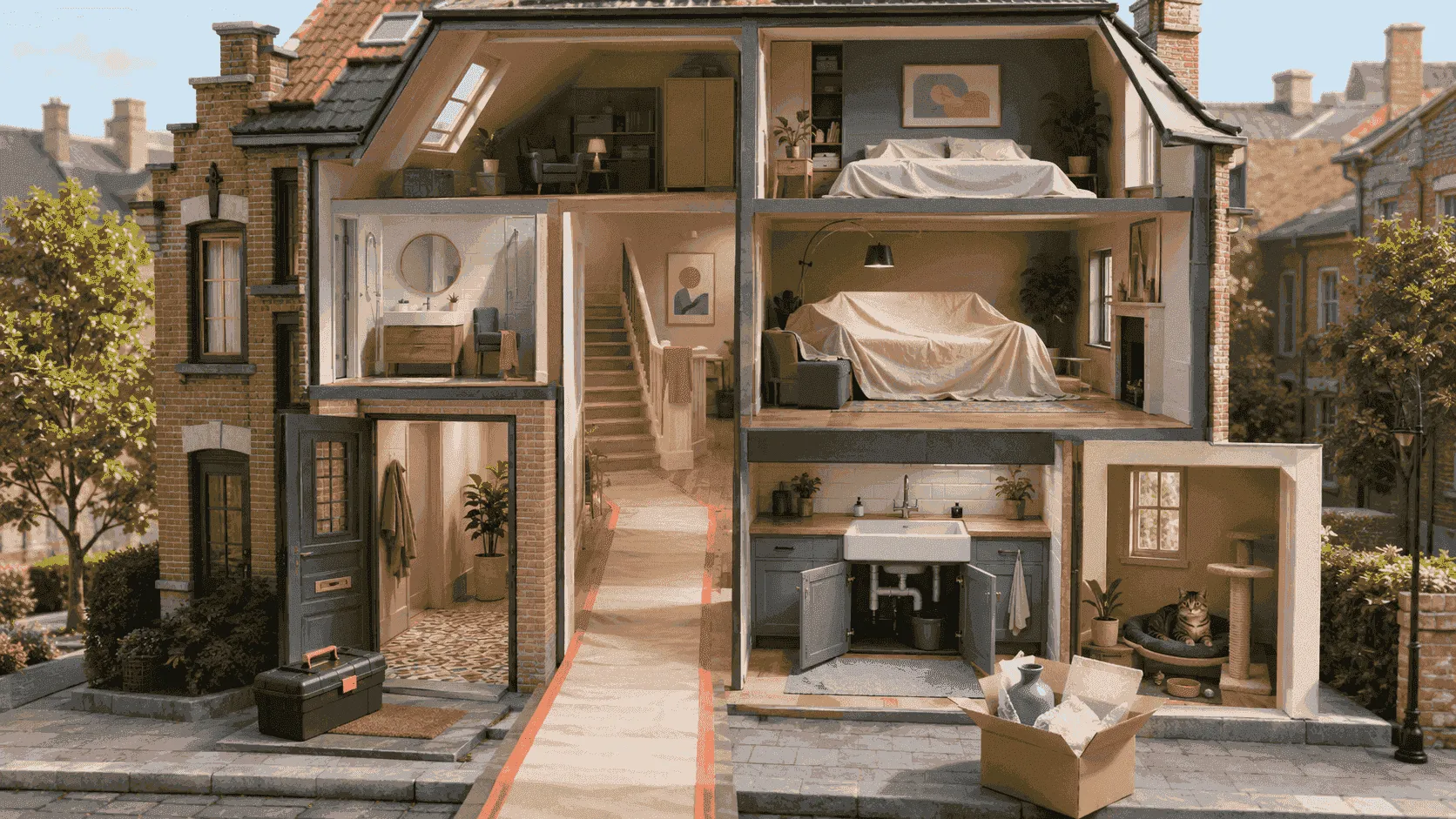
Remove fragile objects, toys, rugs and small furniture from the route. Empty the cupboard below a leaking sink. Keep the electrical panel, main water valve and heating controls accessible. Cover nearby belongings if drilling may create dust.
Do not open a socket, disconnect a pipe or partly dismantle a boiler unless you are qualified to do so. It may create danger and make diagnosis harder. Always mention anything that has already been attempted.
In an apartment building, check access through the entrance, lift and stairs. Send the floor number, door code and realistic parking information in advance.
Keep children and animals away
A minor repair may involve blades, power tools, cables, dust or an open front door. Arrange a separate room for children and pets. Even a friendly dog can obstruct someone carrying a ladder, while a cat may escape during repeated trips outside.
Tell everyone at home about the arrangement. The tradesperson needs room to work safely and concentrate.
Gather useful information
Keep invoices, warranties, manuals, plans and reports from previous visits nearby. In an older property, an electrical diagram or known pipe route can be particularly valuable.
Point out hollow walls, collective heating, recent insulation, difficult cellar access or other relevant features. Tenants should check whether the landlord's agreement is needed before a fixed fitting is altered. Apartment buildings may also have rules covering working hours, lifts and shared spaces.
Agree on costs and scope
Ask whether the price is fixed, hourly or only an estimate. Check whether travel, parts, waste removal and VAT are included. A minimum charge may apply even when the repair itself is short.
A clear quotation describes the work and its main costs. If a hidden complication appears, ask for an explanation and approve the additional price before extra work begins.
Do not buy a replacement part solely because it looks similar. Locks, taps, connectors and wall fixings must match the installation. Ask for confirmation of the exact reference before purchasing.
Make sure someone can make decisions
The person present should understand the request and have authority to approve reasonable decisions. If a neighbour or relative provides access, give them the job list, agreed budget and your contact details.
Check that the bell works and share any entry code beforehand. Allow some flexibility for traffic and parking. At the start, review the tasks briefly. At the end, ask what was completed, whether any precautions apply and if follow-up is recommended. Test the result together when practical.
What should you avoid?
Do not remove every clue before the visit. A damp mark, visible drip or recording of an unusual noise may support diagnosis. Never conceal an earlier temporary repair.
Do not switch off water, electricity or heating without instructions unless there is immediate danger. The fault may need to be observed. If there is a smell of gas, smoke, sparking or a major leak, move people to safety and contact the appropriate emergency service.
Avoid introducing a long list of new jobs on arrival and assuming they fit the original appointment. You can show them, but a second visit may be necessary.
A simple preparation is enough
A useful preparation usually consists of a short description, several photographs, an ordered task list and a clear working area. You do not need technical expertise. Your role is to explain what happens and what outcome you expect.
Fixoo.be helps people in Belgium describe small jobs and look for someone nearby. A precise request makes it easier to discuss timing, materials, price and expectations before the appointment.
Frequently asked questions
Should I buy the materials in advance?
Not necessarily. Ask whether parts are supplied. If you are buying them, have the exact references confirmed first.
Must I remain at home?
Someone should provide access, explain the request and remain reachable for decisions. Different arrangements may be possible for longer jobs.
How many photographs should I send?
Three to five clear images are usually enough: a room overview, close-up, access view and product reference.
Can several small jobs be combined?
Yes. Send the full list beforehand so the appropriate amount of time and material can be planned.
What if an unexpected cost appears?
Ask for a clear explanation and approve the revised price before unplanned additional work continues.
A practical timeline before and after the visit
Several days before the appointment, collect every task in one list, take photographs and send the information. Confirm the address, contact number, access arrangements and pricing method. Ask whether the tradesperson expects you to supply anything. This early exchange is much more effective than trying to resolve every question at the front door.
The evening before, clear the route and move only loose belongings. Leave technical components untouched. Check that meters, valves and controls are accessible and place relevant paperwork together. Charge your phone and report any scheduling problem as early as possible.
On arrival, show the highest-priority issue first. Allow time for an inspection and answer questions with facts. Explain which jobs are essential and which can wait if the appointment runs short. Before additional work starts, agree on its effect on cost and timing.
At the end, review the result together. Run the repaired tap, operate the adjusted door or check the assembled item where appropriate. Follow the qualified person's instructions for electrical and heating systems. Ask about maintenance, drying time, safe use and warning signs that would justify another visit.
Keep the invoice, quotation, messages and references for fitted parts. A brief record of the date and work completed may be valuable during a later repair, tenancy discussion or property sale.
Details that matter in Belgian homes
Many Belgian properties have been altered during several periods. A freshly decorated wall may hide an older substrate, and services do not always follow a predictable route. Share anything you know about previous renovations. The person doing the work should use appropriate detection or testing where uncertainty remains.
Parking can affect arrival and unloading in Brussels, Antwerp, Ghent, Liège, Charleroi and other busy areas. Describe loading options honestly instead of promising an available space. Apartment residents should check whether the building manager or internal rules require notice for access, noisy work or lift use.
Language differences can usually be managed with photographs, measurements and a short written task list. Review the scope at the beginning and ask whenever a technical term is unclear. Precise communication matters more than specialist vocabulary.
Put safety ahead of convenience
A small job remains manageable only while the conditions are safe. Water near electricity, an unstable working height, suspected asbestos-containing material or a smell of gas changes the situation immediately. Stop preparing and seek appropriate assistance rather than attempting to make the issue look simpler.
Full disclosure helps the tradesperson assess risk. They may decide that a specialist is required or that an installation must remain out of service. That is not an inconvenience to work around; it is a responsible decision protecting the occupants, the worker and the property.