

Repair or Replace: How to Make the Right Choice for Your Home
Should you repair or replace a faulty item? Compare cost, safety, age and expected life to make a sensible decision and avoid unnecessary waste.
A tap begins to leak, a door closes less easily, an appliance breaks down repeatedly or a piece of furniture shows its age. The same question nearly always follows: should you repair it or replace it? Repair often appears cheaper, while replacement seems more durable. The right answer depends on age, general condition, safety, parts, consumption and the frequency of previous faults.
Deciding too quickly can be expensive. Replacing something that could continue to serve creates unnecessary cost and waste. Paying for one repair after another on equipment reaching the end of its life can eventually exceed the cost of a reliable replacement. The first invoice is therefore only one part of the decision.
This guide helps residents in Belgium make a balanced choice for common household items and small home jobs. No formula works in every situation. Asking the right questions and obtaining an accurate diagnosis will nevertheless make the options much clearer.
Read also: How much do small home jobs cost in Belgium?
Identify the real cause first
A visible symptom does not always reveal the underlying fault. A door may rub because humidity has affected it, but a loose hinge may be responsible. A cold radiator may contain air, have a stuck valve or indicate imbalance elsewhere in the heating system.
A targeted repair only makes sense when the diagnosis is correct. Changing a washer in a tap with a worn internal mechanism may provide temporary relief. Buying a new light fitting will not resolve a fault in the electrical circuit.
Record the symptoms, how often they occur and the circumstances. Take photographs and find the brand, model and serial number. This information helps a professional distinguish one failed component from general wear.
Age is an indicator, not a verdict
A ten-year-old appliance that has been maintained can be more reliable than a newer one used poorly. An old solid-wood door may deserve restoration, while a badly damaged hollow door may not justify the labour required.
Compare typical service life with actual condition. Equipment near the end of its expected life, already repaired several times and dependent on rare parts tends towards replacement. A solid item with one accessible faulty component is often worth repairing.
Original quality matters. A robust, dismantlable product designed to accept replacement parts retains value. For a low-cost item permanently glued together, the labour needed to open it may exceed the new purchase price.
Compare the complete cost
Ask for an estimate for repair and full replacement. Replacement may include delivery, removal, disposal, modified connections, installation and finishing. The shop price alone is not a fair comparison.
Repair can involve diagnosis, a component, several labour hours and a risk that another part will fail soon. Ask how much additional service life the professional reasonably expects after the work.
A commonly used guide is to investigate replacement when the repair approaches half the cost of a comparable new product. It is not a strict rule. A high-quality item perfectly suited to the property may justify a more expensive repair. For an old and inefficient appliance, replacement may make sense at a lower threshold.
Put safety before savings
A hot socket, damaged cable, smell of gas, unstable fixing or major leak needs rapid assessment. Stop using the affected equipment if continued operation could be dangerous.
Sometimes one component restores safe function. In other cases, the visible fault reveals wider deterioration or an installation that no longer meets current requirements. A competent professional should decide whether a local repair is acceptable.
Avoid improvised solutions that hide rather than solve the problem: tape around a cable, temporary packing under heavy furniture or paint over dampness. A repair should remove the cause and restore safe use.
Consider how often faults occur
One isolated problem is different from repeated failures. Add up previous bills when several interventions have been needed within a short period. The total may reveal that replacement would already have been more economical.
Keep dates, invoices and lists of replaced parts. This history supports a better diagnosis, particularly for a rented property or home managed from a distance.
The same fault returning may indicate incomplete diagnosis. Different failures on an old item suggest general wear. Replacement can then avoid further disruption and repeated appointments.
Check whether parts are available
A repair can depend on a component that is no longer produced. Using the brand, model and serial number, a professional can search for an original part or a compatible alternative.
A readily available, reasonably priced part favours repair. A rare and expensive component with uncertain compatibility makes replacement more attractive. Waiting time also matters when the equipment is essential.
Take care with second-hand parts for safety-critical or technical systems. Their condition and origin must be known. Saving a small amount does not justify additional risk.
Energy and water consumption
Old equipment can still function while consuming considerably more than a recent equivalent. Replacing a frequently used appliance, old circulation pump, water-wasting fitting or inefficient lighting may reduce ongoing costs.
Do not rely on marketing promises alone. Compare actual consumption, frequency of use and the total cost of new equipment. Replacing something used rarely for a minor theoretical saving may never pay back.
Manufacturing and transporting a new product also have an environmental impact. Extending useful life through a small repair is often the more resource-efficient choice when existing equipment remains safe and effective.
Repair or replace a tap?
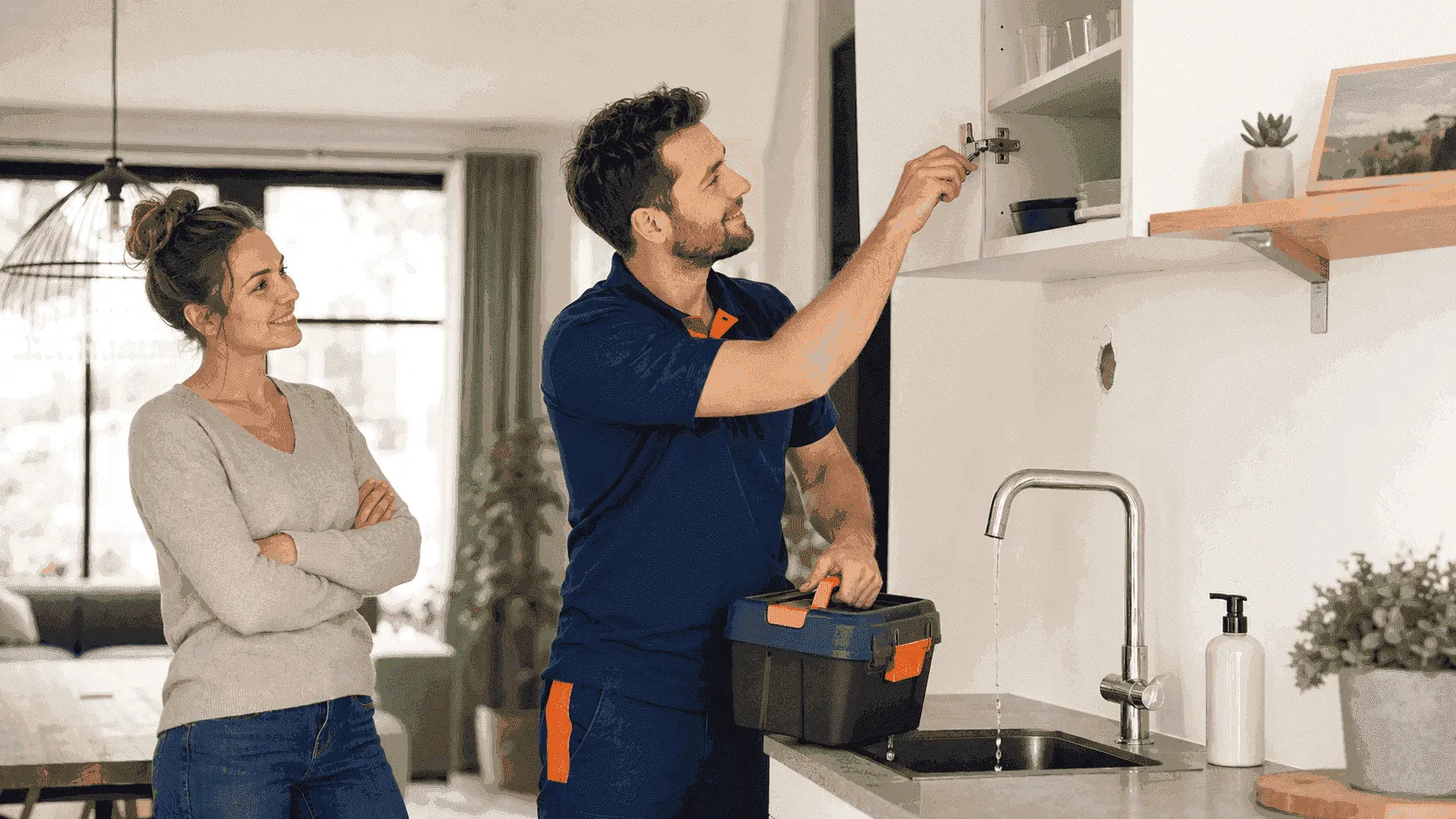
A leak from the spout or handle often comes from a washer or cartridge. If the tap body is sound and parts are available, repair is generally logical. It costs less and avoids changes to connections.
Replacement becomes preferable when the tap is heavily corroded, cracked, difficult to dismantle or subject to repeated problems. Missing parts are another strong reason.
Measure the connections and available space before buying. A cheap model that fits poorly may require more installation work than a compatible product selected with a plumber.
Repair or replace a toilet mechanism?
A toilet that runs continuously often has a faulty float, seal or flushing mechanism. These components can usually be replaced without changing the whole toilet, quickly reducing wasted water.
A cracked cistern, several worn components or a concealed system with unavailable parts may require broader replacement. For an older toilet, a new model may also improve comfort and water use.
The brand and access opening matter in a concealed installation. A professional can check whether a universal mechanism genuinely fits.
Repair or replace a door or window?
A rubbing door, broken handle or worn seal is often repairable. Adjusting hinges, replacing hardware and completing limited finishing can extend the life of good joinery by many years.
Replacement becomes more reasonable when the frame is distorted, material has rotted or insulation performance is very poor. For a window, consider glazing, seals, hardware and frame together.
Older high-quality joinery deserves specialist assessment before disposal. Restoration can preserve the character of a property. Repeated repairs to a low-quality and badly deteriorated component are less likely to represent value.
Repair or replace furniture?
Solid-wood furniture that fits the room well is often worth repairing. Regluing a joint, replacing a hinge, reinforcing a back or renewing the finish can provide a long second life.
The position changes when particleboard has swollen through water and no longer holds fixings. Repairs may remain visible and weak. Replacement is more sensible, especially for furniture supporting a heavy load.
Sentimental value also counts. An inherited piece may justify work beyond its market value. Discuss which original material will remain and what aesthetic result is realistically possible.
Repair or replace a household appliance?
For a recent appliance, one isolated failure and an available part favour repair. Check the legal or commercial guarantee before arranging paid work.
For older equipment, compare the quotation with a comparable new model, energy use and other signs of wear. A costly motor or electronic board combined with several ageing components may make replacement sensible.
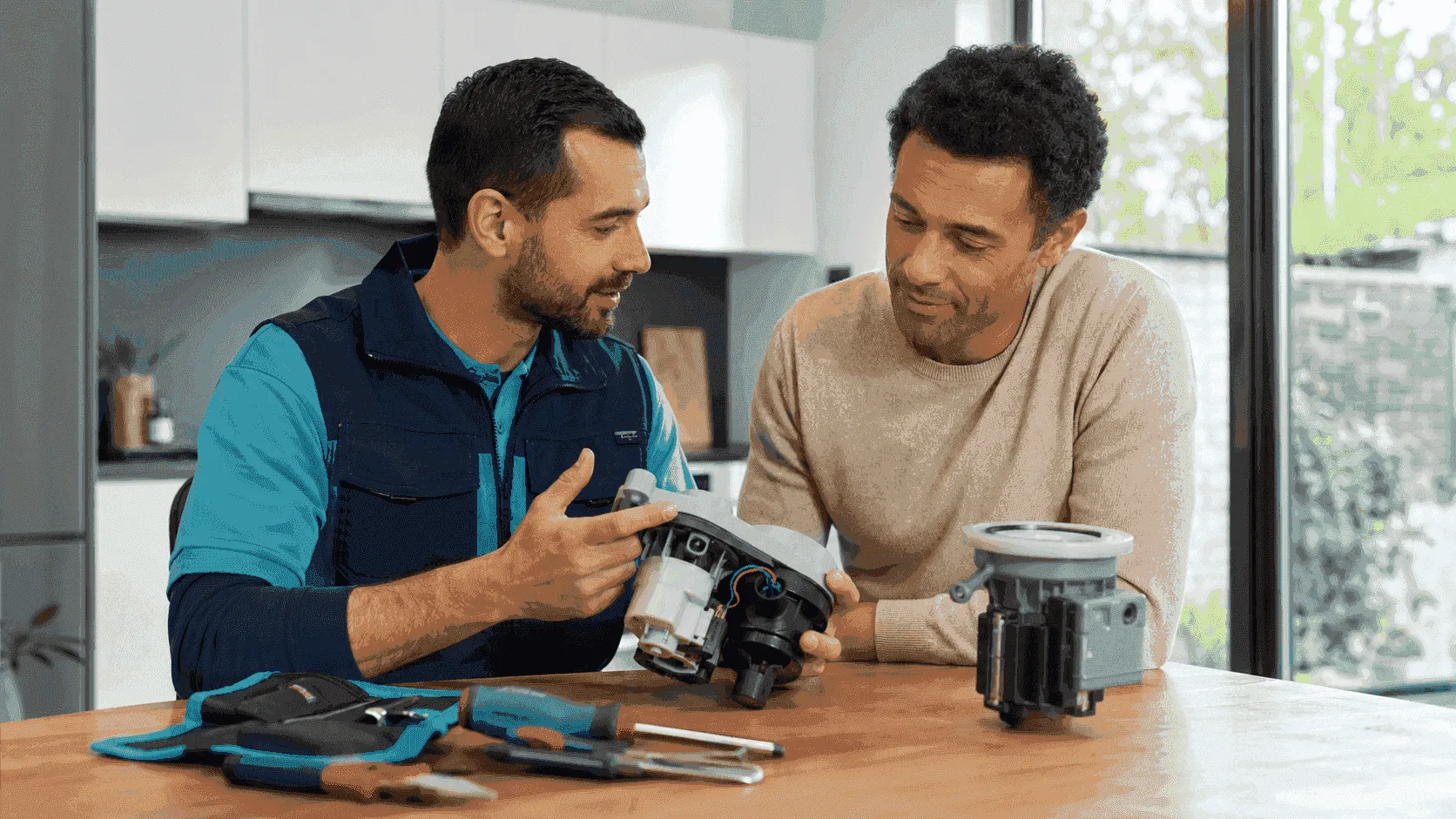
Do not discard a whole appliance automatically because of a handle, hose or simple pump. Diagnosis may reveal a quick solution. Ask whether the repair carries a guarantee and how long parts are likely to remain available.
Consider comfort and future plans
Your plans change the calculation. If the entire room will be renovated in six months, a limited but safe repair may be enough until then. If you intend to stay for many years, a durable and properly sized replacement may be preferable.
Consider changes in accessibility, family size, home working and frequency of use. Replacement can correct equipment that no longer suits your needs, but avoid paying for unnecessary features that add cost and failure points.
For rented property, robust design, simple operation and available parts are often more valuable than complicated technology.
Questions to ask the professional
Ask about the probable cause, required parts and expected durability. Is the repair long-term or temporary? Is another component likely to fail soon? What is the full replacement price, including removal, disposal and installation?
A reliable professional explains the advantages and limits of both options. They do not automatically promote the most expensive solution or pretend that old equipment will become new after one repair.
For a significant amount, request two written scenarios. Compare cost, timing, guarantee, consumption and expected service life. Hidden defects cannot always be predicted, but assumptions should be clear.
A simple decision method
Assess five factors: safety, age, overall condition, total cost and expected additional life. Add parts availability, consumption and importance in daily life.
Lean towards repair when the defect is isolated, the underlying item is sound, parts are available and cost is reasonable. Lean towards replacement when faults repeat, safety is compromised, components are scarce or repair approaches the price of a better new product.
When uncertain, pay for diagnosis first. One hour of expert analysis may prevent several hundred euros of unnecessary spending.
Finding help through Fixoo
Fixoo.be helps people find professionals for small jobs and repairs in Belgium. Describe the fault and attach photographs, brand, model, approximate age and previous repair history.
Ask whether the person can diagnose, repair and, if required, install a replacement. Confirm travel and diagnostic charges before the appointment. Fixoo makes the connection easier; the final choice follows a clear discussion of both options.
Conclusion
Repair is often preferable when a defect is limited and the equipment remains safe, efficient and structurally sound. Replacement becomes logical when failures multiply, parts disappear or the total cost no longer makes sense.
Consider the immediate budget and the next few years. A cheap repair that must be repeated is not a saving. Prematurely discarding a useful product is not good value either.
Are you unsure about a leak, damaged item of furniture or faulty appliance? Describe your need on Fixoo.be and find a professional near you for a clear diagnosis.
Frequently asked questions
At what repair price should I replace instead?
There is no universal threshold. When repair approaches half the cost of a comparable new product, investigate replacement, especially if the old item is already worn.
Is repair always more environmentally friendly?
Often, because it extends useful life. Consumption, replacement parts and repeated repairs should also be considered.
Can I request diagnosis only?
Yes. Confirm travel and assessment charges beforehand. You can then decide without accepting the repair immediately.
Who removes the old equipment?
It depends on the offer. Ask whether disposal is included in the replacement price and whether a supplement applies.
What should I send before the appointment?
Provide photographs, brand, model, serial number, approximate age, symptoms and repair history.